01
Closure is not the end of the workflow
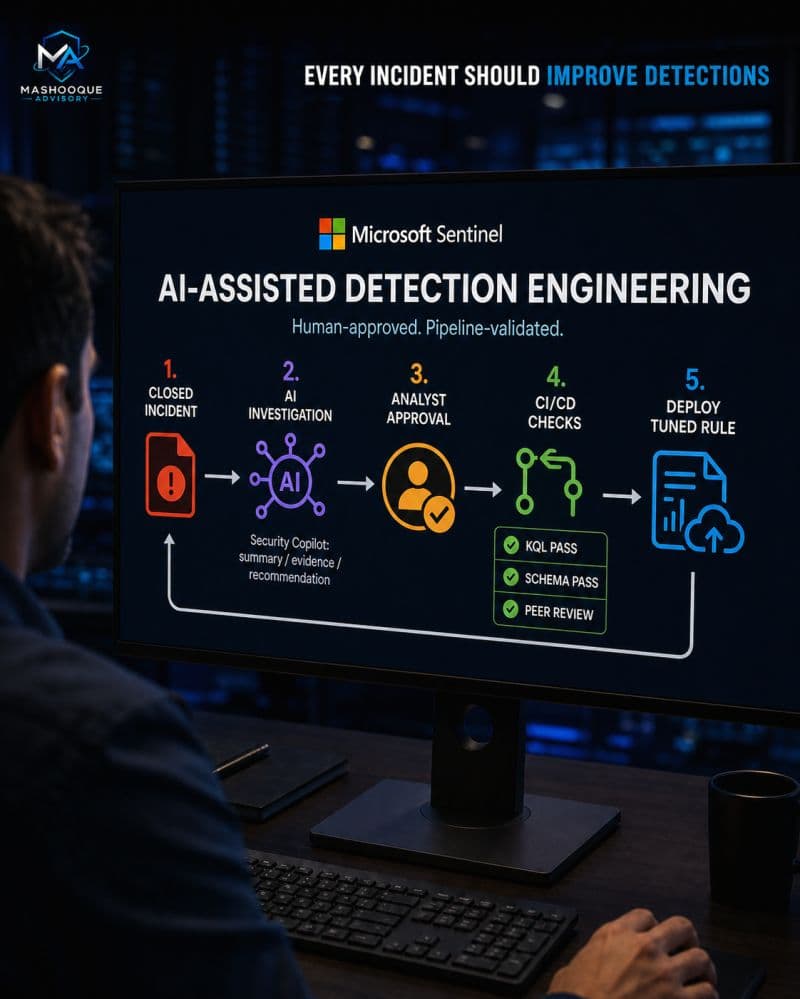
Microsoft Sentinel detection engineering should turn each investigation into a controlled learning cycle: detection, AI-assisted investigation, analyst decision, repository change, validation and deployment.
AI can consolidate alerts, timelines, entities, indicators and risk context, then prepare a recommended investigation path. It should propose and explain. It should not silently rewrite a production detection.
02
Capture the evidence that improves the rule
- The true-positive or false-positive outcome and supporting evidence.
- Missing telemetry, weak entity mapping and investigation delays.
- Required changes to the KQL window, threshold, exclusions or grouping.
- The expected effect, accountable owner and rollback plan.
03
Separate recommendation from release
Treat the detection as code. Commit proposed changes to GitHub or Azure DevOps and require automated checks for query quality, schema, rule metadata and peer approval before deployment through a Microsoft Sentinel repository connection.
- AI accelerates evidence review and prepares the recommendation.
- The analyst owns the security judgement.
- CI/CD provides repeatable validation, approval and deployment control.
04
The operating outcome
This turns post-incident learning into a governed detection-improvement process rather than an isolated closure comment. The result is faster investigation, measurable tuning and stronger production controls without surrendering human accountability.
References